Showing posts with label press release. Show all posts

Thursday, 13 December 2012

Re-introduction of the DVRPTR_V1 Boards :: Press Release


Re-introduction of the DVRPTR_V1 Boards as a Low Cost Solution for Building Hotspots, Repeaters and Stand-alone Repeaters

FOR IMMEDIATE RELEASE

Montreal, December 7, 2012

Increased demand for a low-cost solution for building hotspots and repeaters, encouraged the re-introduction of the proven DVRPTR_V1 boards as a viable alternative to the existing offering.

These robust and low-cost boards are a great incentive for many hams to start experimenting with the digital modes.

The "new" DVRPTR_V1 boards will be assembled, individually tested and shipped worldwide from Montreal, Canada. Depending on the demand, the boards are expected to be ready for shipping by the end of February 2013.

" As creator of the original DV-RPTR V1 project (name, hardware and firmware) I'm happy that this project will continue..." said Jan Alte, DO1FJN. "This board is not perfect - I know, but it is a reliable, low-price solution for building hotspots, repeaters and stand-alone repeaters. I will resume my firmware development and I hope to find more dedicated specialists that can help improve the board's open source firmware."

Bruce Given, VE2GZI, hardware engineer with over 20 years of experience in the electronic components business, will coordinate the production and logistics efforts of this project.

"My top priority is to promote this great product in the amateur community and to offer it bundled with timely delivery, excellent service and technical support" said Bruce Given, VE2GZI.

Contact information:
Bruce Given, VE2GZI, bruce.given@gmail.com
http://groups.yahoo.com/group/DVRPTR_V1/

Tuesday, 11 September 2012

RAQI Press Release :: Amendment to the Ban of Cellular Telephone Use While Driving

Communiqué 2012-03 – Amendment to the Ban of Cellular Telephone Use While Driving

The ban on the use of cellular telephones while driving came into force in April 2008. Since that time different police departments have issued tickets for the use of various types of devices which could be construed as telephone systems. Those who have received these tickets have vigorously contested them. The courts which have heard these cases have expanded considerably on the meaning of the law to include a multitude of communications equipment far from being cellular telephones.

RAQI has periodically made representations to various government authorities with a view to excluding amateur radio equipment from the ban on the use of cellular telephones while driving. On different occasions such as the RAQI nets or when meeting with club members RAQI has explained that the SAAQ and the Ministry of Transport were waiting to see in which direction the courts would interpret the cellular telephone law.

RAQI has also pointed out that radio amateurs are not the only group affected by the wider interpretation of the courts. For example, among others, the Ministry of Transport itself, Hydro Québec and many others cannot use their radio communications equipment in their own vehicles.

After four years of uncertainty the situation has now been clarified by amendments to the Highway Safety Code which came into effect this past June 6. The new article 439.1 of the code reads as follows:

439.1. No person may, while driving a road vehicle, use a hand-held device that includes a telephone function.

For the purposes of this section, a driver who is holding a hand-held device that includes a telephone function is presumed to be using the device.

This prohibition does not apply to drivers of emergency vehicles in the performance of their duties.

The first paragraph does not apply to a two-way radio, that is to say a cordless voice communication device which does not allow the parties to speak simultaneously.

The Minister may, by order, determine other situations or types of devices to which the prohibition set out in the first paragraph does not apply.

The underlined text is the two paragraphs added on June 6, 2012.

The legislature has retained the spirit of the 2008 law to prevent the use of cellular telephones by the general public while driving without restricting those using radio communications systems which were already in use before the arrival of cellular telephones, such as amateur radio.

RAQI is proud to have contributed, by its representations to the authorities concerned, to the clarification of the text of the law banning the use of cellular telephones while driving and permitting ALL QUEBEC RADIOAMATEURS and not just members of RAQI to continue to use their mobile communications equipment in their vehicles as they always have.

RAQI hopes that the radio amateur community recognizes the importance of a strong provincial association and the support it provides.
(30)

Source: http://raqi.ca/node/278

Links:
The Quebec Highway Safety Code (EN)
Download a printable version of the amendments in PDF format (FR/EN)

Sunday, 27 May 2012

VA2CYH DMR Repeater is back on the air

Great news for the MotoTRBO enthusiasts in Quebec!

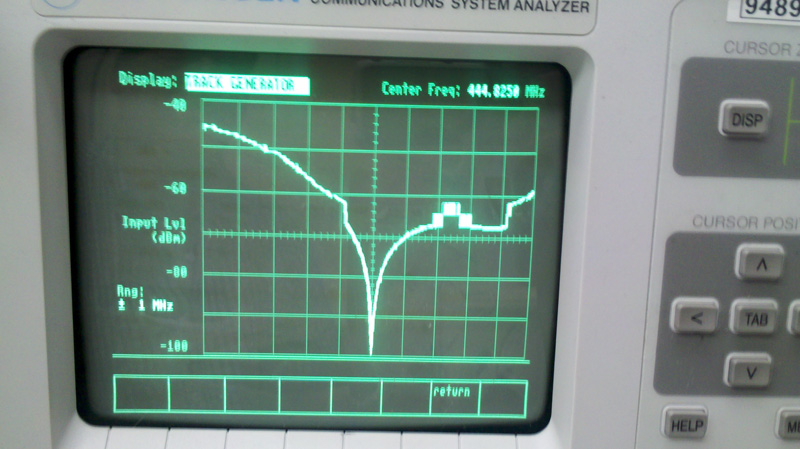
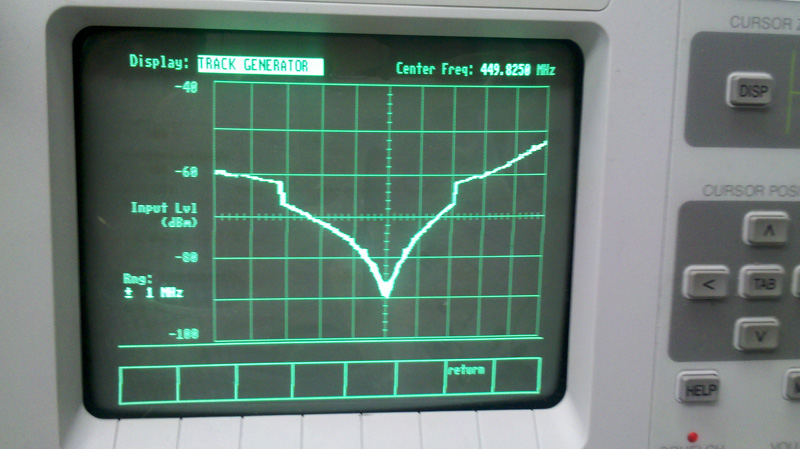
The VA2CYH DMR repeater is operating again, in test mode, on 449.825 MHz (minus) from its location in Covey Hill, Qc.
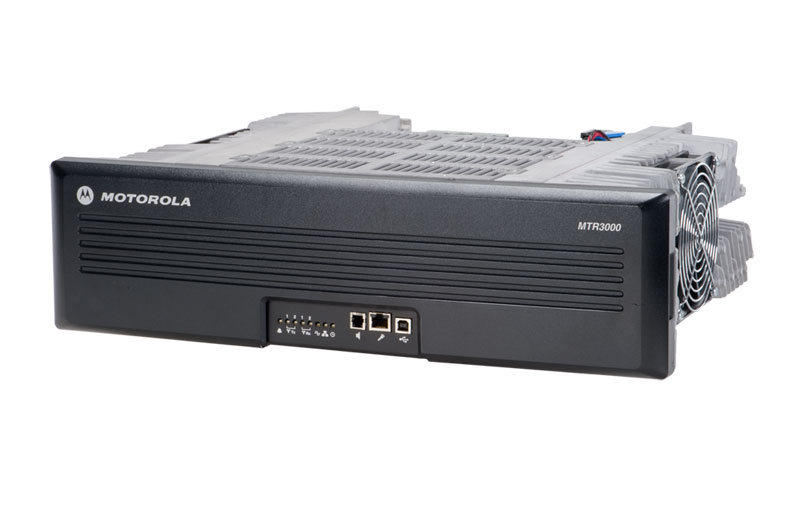
Powered by the Motorola MTR3000 Digital/Analog repeater, the system runs for now in low power mode (40W) until Alain VA2SPB receives the new duplexer. Once the new duplexer is in place, the repeater will put close to 100W in a 8 bay antenna.
As you can see from the enclosed images, Claude VE2YI did a great job tuning the small Sinclabs duplexer.
Click to enlarge
Click to enlarge

Sunday, 20 November 2011

Marine AIS Search and Rescue Transmitter (SART) Processor

CML Microcircuits has announced the launch of the new cutting-edge Marine AIS Search and Rescue Transmitter (SART) processor, the CMX7045.

An AIS-SART is a self-contained radio transmitter that is deployed by a survival craft or distressed vessel to notify its position for the purpose of rescue. In a rescue situation the device repeatedly transmits its updated position reports using a standard Automatic Identification System (AIS). Position and time synchronisation is derived from an onboard GNSS receiver (e.g. GPS). Every minute the unit transmits multiple position reports to maintain a high probability that at least one of the position reports is sent on the highest point of a wave, guiding rescue services accurately to its location.

The CMX7045 is a highly integrated and flexible baseband processor fulfilling the needs of an AIS-SART and meeting IEC 61097-14 requirements. In addition to providing the core AIS-SART formatted data functionality, the CMX7045 incorporates a number of auxiliary operations that assist in the overall system implementation and therefore reduce component count and cost.


CMX7045 AIS-SART Processor IC:
•    9600 baud GMSK modulator
•    AIS-SART formatted data
•    Very low power sleep modes
•    PA Ramp automation
•    Four DAC outputs
•    Multiplexed two-input ADC
•    System PLL clocks
•    Small 48-pin VQFN/LQFP packages
•    IEC 61097-14 compliant

Retrieved by Claude Everton VE2YI
Source: CML Microcircuits